
Biomarkers
8 min read
How do I know if I have low testosterone?
AUTHOR
AL
Axo Longevity
REVIEWED BY
AL
Axo Longevity
UPDATED
August 12, 2026
Share

Low testosterone has become an increasingly common explanation for almost any change a man notices in his thirties or forties.

If your sex drive is lower. Training feels harder, recovery takes longer, or you do not have the same drive you used to.

Testosterone could be part of the reason. But none of those changes, on their own, can tell you that it is low.

Poor sleep can affect sexual function and energy. Stress can reduce libido. Thyroid problems, medication, low iron and changes in metabolic health can create a very similar picture.

Low testosterone is a specific medical condition. It is diagnosed when relevant symptoms appear alongside consistently low testosterone levels measured under the right conditions. One online checklist or one unexpected blood result is not enough.

So, how do you know?

You start by understanding what testosterone does, then look at which symptoms matter most, what may be lowering it and how to test it properly.

What is testosterone, and how it works?

Testosterone is the main male sex hormone. Most men associate it with sex drive and muscle, and it does influence both, but its reach is considerably wider.

How your body produces testosterone

Almost all testosterone is made in the testes, inside cells called Leydig cells. A much smaller amount comes from the adrenal glands, which sit above the kidneys.

But production starts in the brain:

  • The hypothalamus releases GnRH, a hormone that starts the process.
  • GnRH prompts the pituitary gland to release LH.
  • LH travels through the bloodstream to the testes, where it tells the Leydig cells to produce testosterone.
  • As testosterone rises, it signals back to the brain, telling it to reduce the signal.

It works more like a thermostat than a tap, constantly adjusting rather than producing the same amount all day.

Testosterone is also released in pulses and follows a daily rhythm. Levels rise during sleep and usually reach their highest point in the morning.

What testosterone does for you

  • Sex drive and erections: Testosterone supports sexual desire and contributes to erectile function. Changes in this area tend to track low levels more closely than general symptoms such as tiredness.
  • Muscle and strength: It supports muscle protein synthesis, helping the body build and maintain lean mass.
  • Bone health: Testosterone helps preserve bone density. When levels remain severely low, the risk of bone loss and osteoporosis rises.
  • Body composition: It influences the balance between muscle and fat, including visceral fat stored around the internal organs.
  • Blood and oxygen: Testosterone stimulates red blood cell production, which helps carry oxygen around the body. This effect is also why blood count is monitored in men receiving testosterone treatment.
  • Metabolic health: Low testosterone often appears alongside obesity, insulin resistance and type 2 diabetes. The relationship can run in both directions.
  • Fertility: Testosterone is essential for sperm production, working alongside another pituitary hormone called FSH.
  • Mood, motivation and energy: Testosterone may influence all three, but these are among its least specific effects. Sleep, stress, mental health, thyroid function and nutrition can produce similar changes.

Testosterone tends to decline gradually with age. Population studies have estimated an average fall in total testosterone of roughly 0.4% a year, while free testosterone may decline faster as SHBG rises. 

That is a slow drift, not a cliff. When something changes sharply in your late thirties or forties, ageing alone is rarely the whole explanation.

The difficulty is that most of these effects do not belong only to testosterone. Some symptoms are much stronger clues than others.

Which symptoms are most closely linked to low testosterone?

The symptoms that track low testosterone most reliably are sexual:

  • a persistent reduction in sexual desire
  • fewer spontaneous or morning erections
  • difficulty getting or maintaining an erection

That does not mean every change in sexual function is hormonal. Erections also depend on blood flow, nerve function, medication, psychological health and several other factors. But sexual symptoms are more specific to testosterone deficiency than fatigue, weight gain or low mood.

This became clear in the European Male Ageing Study, which examined 3,369 men aged 40 to 79. Researchers compared measured testosterone levels with more than 30 possible symptoms. 

Only three sexual symptoms showed a consistent relationship with low testosterone: reduced sexual thoughts, fewer morning erections and erectile difficulties. The estimated prevalence of late-onset hypogonadism in the study was 2.1%, far lower than symptom checklists might suggest.

What can lower testosterone?

Occasionally there is a medical problem affecting the testes or the hormone signals coming from the brain. But testosterone can also fall when poor health, medication, or a sustained strain on the body suppress an otherwise functioning system.

That distinction matters because you can improve several influences.

Factors that may suppress testosterone

  • Excess body fat and metabolic dysfunction: Obesity is one of the strongest influences on testosterone in adult men. In one study of men aged 45 and over, low free testosterone was found in 40% of men with obesity and 50% of those who also had diabetes. Obesity can lower SHBG and alter the signals controlling testosterone production.
  • Poor or disrupted sleep: Testosterone production is closely tied to sleep. In one small study, restricting healthy young men to five hours of sleep a night for one week reduced daytime testosterone by 10% to 15%. The study involved only ten men, so the exact figure should not be applied to everyone, but it shows how quickly sleep can influence the result.
  • Training hard without eating enough: When energy intake repeatedly fails to cover training demands and basic body function, the brain may reduce reproductive hormone signalling. This is recognised as part of relative energy deficiency in sport and can affect male athletes as well as recreational exercisers.
  • Heavy alcohol use: Regular heavy drinking can interfere with testosterone production and affect the liver, which plays an important role in processing hormones.
  • Medication and external hormones: Opioid painkillers, glucocorticoids and anabolic steroids can suppress testosterone production. Taking testosterone or anabolic steroids from outside the body can reduce the signals that normally keep natural production running. Recovery after stopping can take time and varies between people.
  • Acute illness: Testosterone can fall temporarily when you are unwell. Testing during an infection or shortly after a significant illness may therefore produce a result that does not reflect your usual level.

Medical causes that need investigation

The problem can begin in the testes themselves. Causes include previous testicular injury, certain infections, cancer treatment, an undescended testicle or genetic conditions such as Klinefelter syndrome.

It can also begin higher up, when the hypothalamus or pituitary gland does not provide enough stimulation. Raised prolactin, iron overload and pituitary disease are among the possible causes.

This is why a low testosterone result is the beginning of the investigation, not the end.

 How testosterone should be measured (and why one number isn’t enough)

The first number on your report will usually be total testosterone. In Europe it’s often given in nmol/L; in the U.S., ng/dL.

Total testosterone counts all the testosterone in your blood. But most of it is not available to your tissues.

Testosterone travels around your body bound to two proteins made by your liver:

  • SHBG (sex hormone binding globulin), which grips testosterone tightly
  • Albumin, which holds it loosely and releases it easily

Only a small amount is not stuck to anything at all. That’s called free testosterone, and along with the loosely bound portion, it’s the part your body can actually use.ondemand.labcorp+1

Think of SHBG as a gatekeeper. Total testosterone tells you how much testosterone is in your blood. It does not tell you how much is getting through to your muscles, bones, and brain.

This is why two men can have exactly the same total testosterone, different amounts of SHBG, and feel completely different. One has plenty getting through. The other has most of it locked away.

If your total testosterone doesn’t match how you feel, measuring SHBG and calculating free testosterone will usually explain why.

Why “Normal” Is Not the Same as Optimal

You now know there are three numbers that matter (total T, free T, SHBG), and around a dozen things that move them.

Here’s what happens when all of that gets reduced to one word on a report.

A reference range shows where your result sits compared with a group of people who were tested when the range was created. That’s all it does.

For men, the widely used range for total testosterone is roughly 9–32 nmol/L (about 260–920 ng/dL). That range was built by measuring healthy men aged 19–39 who were not overweight.

Now compare two men:

Person Age Total Testosterone Report Says
A 22 24 nmol/L Normal
B 52 10 nmol/L Normal

One sits near the top of the range. The other is just above the bottom of it. They’re given the same word. Neither has been told anything about their SHBG, so neither knows how much testosterone is actually reaching them.

There’s a second problem. Laboratories do not agree on what the range should be.

One survey of 25 laboratories found 17 different sets of reference values in use, with the lowest acceptable value varying by more than three times between them.

The Endocrine Society, the main international body for hormone specialists, has said that because testing methods are not standardised, the same sample of blood can be reported as low at one laboratory and normal at another. They noted this leads to some men being wrongly diagnosed and others being wrongly reassured.

A reference range cannot tell you:

  • Whether your result is normal for you
  • Whether it has changed since last time
  • How much of it your body can use
  • What is causing it

So the question worth asking is not whether your testosterone is “normal.” It’s what your result means for your body, at your age, given everything else going on.
How do you test for low testosterone properly?

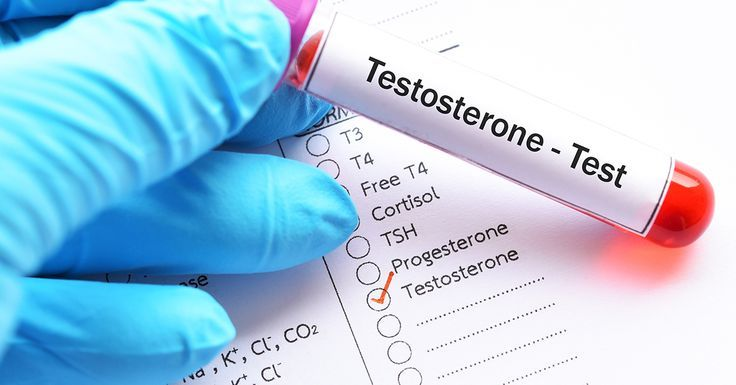
The first test is total testosterone, but the conditions under which it is taken matter.

European guidance recommends:

  • testing in the morning, usually between 7 am and 10 or 11 am
  • taking the sample while fasting
  • avoiding testing during an acute illness
  • repeating a low result on a separate morning
  • using a reliable laboratory assay

Testosterone is normally higher in the morning and food can temporarily reduce the measured concentration. A sample taken late in the afternoon after eating may therefore appear low in a man whose morning result would be normal.

One test gives you a number. The wider panel helps explain it.

Test What it adds
Total testosterone Measures the total amount circulating in the blood
SHBG Shows how much testosterone may be tightly bound
Calculated free testosterone Estimates the portion more readily available to tissues
LH and FSH Help show whether the issue may lie in the testes or the signal from the brain
Prolactin Can suppress sexual desire and reproductive hormone signalling
HbA1c, glucose and insulin Look for metabolic dysfunction associated with low testosterone
TSH and free T4 Check for thyroid problems that can produce similar symptoms
Ferritin and iron studies Investigate fatigue and identify iron deficiency or overload
Full blood count Checks for anaemia and provides useful context before treatment decisions

Testosterone shows the level. SHBG and free testosterone help explain how much may be available. LH and FSH help identify where the problem may begin. The remaining biomarkers help show whether testosterone is the main story at all.

This is also why testing one hormone in isolation can leave you with more questions than answers.

With Axo Longevity, testosterone can be assessed alongside the hormonal, metabolic, thyroid and nutritional biomarkers needed to build a broader picture of what may be influencing how you feel.

See every biomarker included in the Axo Longevity panel →

How Axo Longevity reads testosterone

A testosterone result only becomes useful when you understand what may be influencing it.

That is why Axo Longevity looks beyond testosterone alone.

We measure more than 100+ biomarkers across 36+ health areas. Your testosterone result is then read alongside this wider picture, rather than treated as an isolated number on a laboratory report.

You receive:

  • Your Axo Longevity Health Score, showing how your key health systems are performing together.
  • Results are interpreted against optimal ranges, helping you understand where you sit within the range and whether you have crossed a laboratory threshold.
  • A personalised action plan, shaped around your results, lifestyle and health goals.
  • Repeat testing, so you can see whether your testosterone and the biomarkers around it are changing over time.

The aim is not to push testosterone as high as possible.

The aim is to understand what your level means for your body, what may be driving it, and which actions are most relevant for you.

How Do I Know If I Have Low Testosterone? Symptoms & TestsReferences

General information about health and wellness, not medical advice. Reference ranges vary between laboratories and assays. Discuss your own results with a qualified clinician before changing medication or supplementation.


  1. Bhasin S, Brito JP, Cunningham GR, Hayes FJ, Hodis HN, Matsumoto AM, Snyder PJ, Swerdloff RS, Wu FC, Yialamas MA. Testosterone therapy in men with hypogonadism: an Endocrine Society clinical practice guideline. Journal of Clinical Endocrinology & Metabolism, 2018, 103(5), 1715–1744. DOI: 10.1210/jc.2018-00229
  2. Wu FCW, Tajar A, Beynon JM, Pye SR, Silman AJ, Finn JD, O'Neill TW, Bartfai G, Casanueva FF, Forti G, Giwercman A, Han TS, Kula K, Lean MEJ, Pendleton N, Punab M, Boonen S, Vanderschueren D, Labrie F, Huhtaniemi IT. Identification of late-onset hypogonadism in middle-aged and elderly men. New England Journal of Medicine, 2010, 363(2), 123–135. DOI: 10.1056/NEJMoa0911101
  3. Antonio L, Wu FCW, O'Neill TW, Pye SR, Carter EL, Finn JD, Rutter MK, Laurent MR, Huhtaniemi IT, Han TS, Lean MEJ, Keevil BG, Pendleton N, Rastrelli G, Forti G, Bartfai G, Casanueva FF, Kula K, Punab M, Giwercman A, Claessens F, Decallonne B, Vanderschueren D. Low free testosterone is associated with hypogonadal signs and symptoms in men with normal total testosterone. Journal of Clinical Endocrinology & Metabolism, 2016, 101(7), 2647–2657. URL: https://academic.oup.com/jcem/article/101/7/2647/2810108
  4. Leproult R, Van Cauter E. Effect of 1 week of sleep restriction on testosterone levels in young healthy men. JAMA, 2011, 305(21), 2173–2174. DOI: 10.1001/jama.2011.710
  5. Mountjoy M, Ackerman KE, Bailey DM, Burke LM, Constantini N, Hackney AC, Heikura IA, Melin A, Pensgaard AM, Stellingwerff T, Sundgot-Borgen JK, Torstveit MK, Jacobsen AU, Verhagen E, Budgett R, Engebretsen L, Erdener U. 2023 International Olympic Committee's (IOC) consensus statement on Relative Energy Deficiency in Sport (REDs). British Journal of Sports Medicine, 2024, 57(17), 1073–1098. DOI: 10.1136/bjsports-2023-106994
  6. Matsumoto AM. Approach to the patient: the evaluation and management of men ≥50 years with low serum testosterone concentration. Journal of Clinical Endocrinology & Metabolism, 2023, 108(9), e871–e884. URL: https://academic.oup.com/jcem/article/108/9/e871/7095609
  7. Endocrine Society. Statement on testosterone replacement therapy. 2026. URL: https://www.endocrine.org/news-and-advocacy/news-room/2026/statement-on-testosterone-replacement-therapy