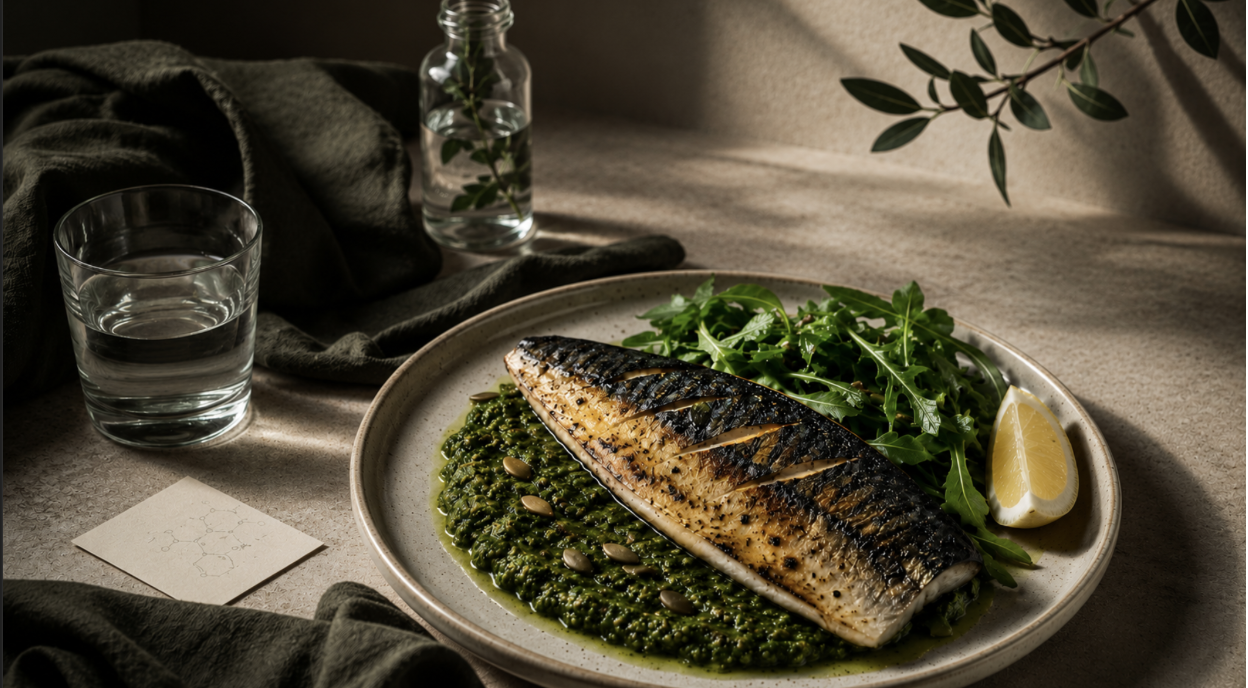
Why does healthy food so often feel like something you should eat, rather than something you actually want to eat?
Healthy eating becomes much easier when the food actually tastes good, and this is the kind of recipe you can imagine making again without needing a motivational speech first.
This mackerel recipe for hormone health gives you crisp skin, lemon, a bright spinach-and-pumpkin-seed pesto, and that rich, salty flavour that feels far more special than the effort required.
Underneath the flavour, it gives your body vitamin D, omega-3 fats, magnesium, zinc, and protein, nutrients that support hormone health, testosterone support, recovery, energy, and everyday performance in both men and women.
So if your vitamin D is low, if your testosterone is not where it should be, or if you are simply trying to eat in a way that supports longevity, healthy ageing, staying active, and feeling better in your body, this is a good place to start.
This meal will not correct a clinical deficiency overnight, and it will not replace testing, treatment, or proper medical advice if your biomarkers (the measurable signals in your bloodwork that reveal how your body is functioning beneath the surface) are seriously out of range.
What it can do is give your body more of what it needs, in a way that tastes good enough to repeat.
1. Make the pesto first
Blend the spinach, toasted pumpkin seeds, garlic, lemon juice, and a pinch of salt until everything is roughly combined. Then pour in the olive oil gradually until you get a thick, slightly chunky pesto. Stir in the Parmesan at the end if you’re using it, then set it aside.

2. Prepare the mackerel
Pat the fillets completely dry, because that’s what helps the skin crisp up properly. Score the skin two or three times, then rub the fish with olive oil, lemon zest, salt, and pepper.

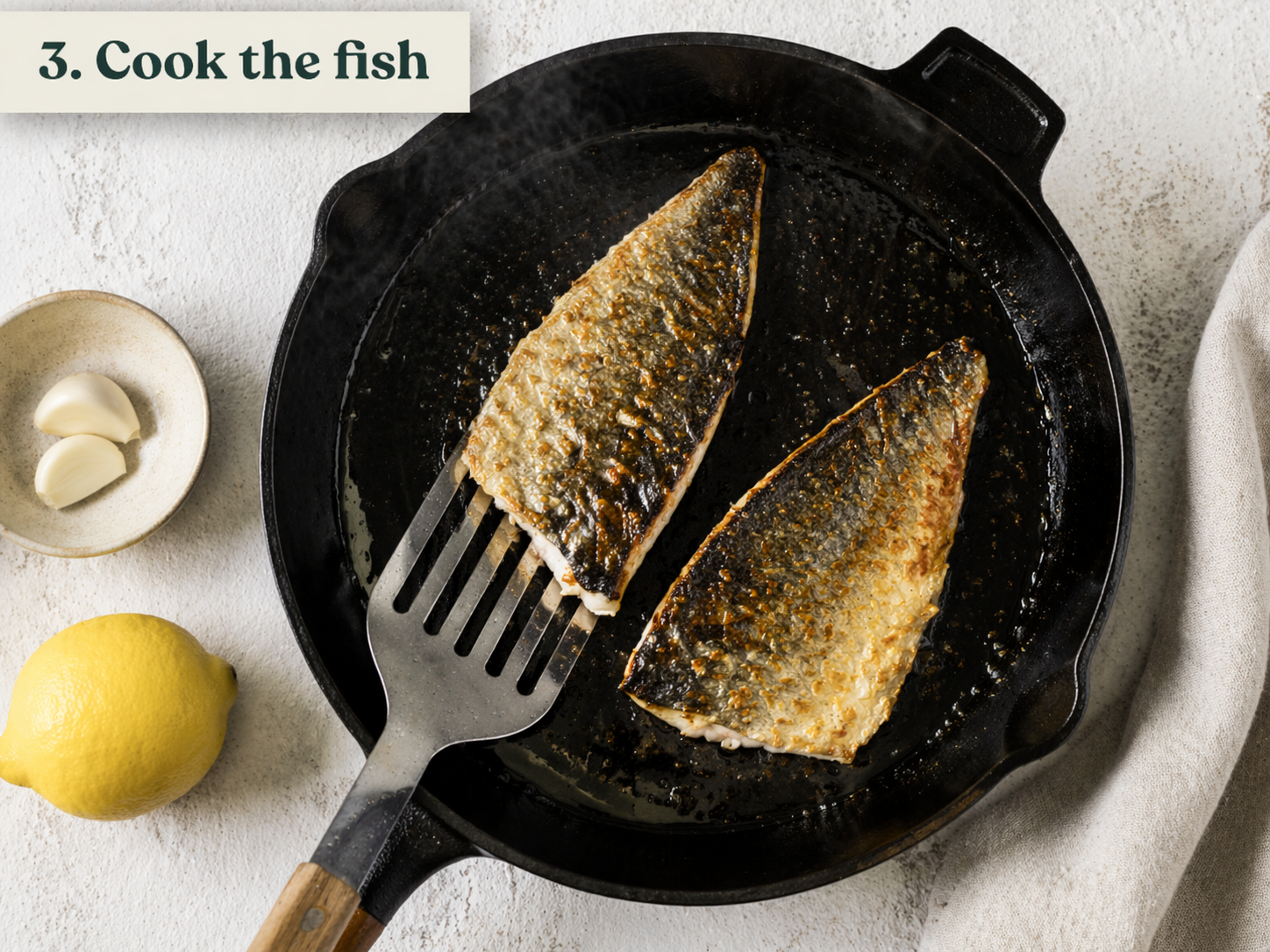
3. Cook the fish
Heat a cast-iron pan until it’s properly hot. Rub the surface with the cut side of the garlic clove, then place the fillets skin-side down. Press gently for about 30 seconds, then leave them alone for 3 to 4 minutes until the skin turns deeply golden. Flip and cook for 1 more minute.
Why is this mackerel recipe good for hormone health?
Mackerel provides vitamin D, omega-3 fats, and protein, which makes it a useful food for energy, recovery, healthy ageing, and testosterone support. A 2024 study of more than 1,500 older men found that higher fish intake was associated with higher testosterone levels, which makes oily fish like mackerel a sensible ingredient when you are building meals around hormone health.
Axo measures testosterone, vitamin D, DHEA-S, and other hormone markers in one panel, giving you a clearer picture of your energy, recovery, and hormone health.
Vitamin D also matters beyond the usual “sunshine vitamin” conversation, because it plays a role in immune function, neuromuscular function, glucose metabolism, and inflammation regulation, and oily fish is one of the more practical food sources to include if your intake is low.
The spinach and pumpkin seed pesto adds more than colour. Spinach brings magnesium, a mineral involved in muscle function, blood glucose control, and many enzyme reactions in the body, while pumpkin seeds bring zinc, a mineral that has been linked to testosterone status in human research.
That does not make this a magic hormone meal, and it should not be treated like one.
It simply gives your body useful nutrients in a meal that is easy to enjoy, easy to repeat, and built around real food rather than another promise in a bottle.
Is mackerel good for hormone health?
Yes, mackerel is a useful food for hormone health because it provides vitamin D, omega-3 fats, and protein, which are all relevant to energy, recovery, inflammation balance, and testosterone support.
Can food support testosterone naturally?
Food can support testosterone naturally when it helps correct low intake of key nutrients such as vitamin D, zinc, magnesium, protein, and healthy fats, but food will not replace medical treatment if testosterone is clinically low.
Does testosterone matter for women as well as men?
Yes, testosterone matters for both women and men, although women produce it in smaller amounts. Healthy testosterone levels are involved in libido, mood, muscle strength, bone health, energy, and overall hormone balance.
How does mackerel support longevity and healthy ageing?
Mackerel can support longevity and healthy ageing because it provides protein, omega-3 fats, and vitamin D, nutrients linked to recovery, cardiovascular health, inflammation balance, muscle maintenance, and long-term wellbeing.