
Low energy is often treated as a lifestyle problem.
When your energy drops, you look at the obvious things first: a run of bad sleep, or a stretch at work that has been heavier than usual. Sometimes that is the whole story.
Other times it carries on. Concentration fades earlier in the day. Exercise feels heavier than it should, and recovery stretches out. You can still tell you are running below your usual level, even though nothing looks obviously wrong.
Tiredness is a symptom, and it sits downstream of a lot of different biology. That is why asking whether you are tired only gets you so far. The more useful question is what has changed.
Energy depends on several systems working at once. Iron and hemoglobin move oxygen to your tissues. Glucose and insulin govern how steadily fuel reaches your cells. Thyroid hormones set your metabolic pace. Vitamin status, background inflammation, and your hormone balance affect how efficiently energy is produced and restored.
Each of those leaves a trace in your blood, and their value becomes clearer when the results are read against each other.
What is a biomarker?
A biomarker is anything measurable in your body that reflects what is happening inside it. The ten below are all measured from a single blood sample. Some appear in a standard health check. Others, including hs-CRP, SHBG and fasting insulin, are usually only measured as part of a comprehensive panel.
📌 If you want to understand biomarkers properly before reading on, take a look at our previous article “What are biomarkers?"
In this article, we look at ten biomarkers that may help explain persistent low energy, what each one measures, and what the evidence tells us.
Ferritin is the protein that stores iron, and the level in your blood reflects how much iron your body has in reserve.
Why it matters
Iron allows haemoglobin to carry oxygen around your body and also supports energy production inside your cells.
Iron reserves can fall before haemoglobin does. This means anaemia is often a later sign, and a standard blood count may still appear normal while your iron stores are already low enough to affect how you feel.
💡 Did you know? Your body reuses almost all of its iron. Around 25 mg gets recycled every day from red blood cells reaching the end of their life, while only 1 to 2 mg arrives from food. That balance is why blood loss lowers your reserves far faster than diet does.
Worth checking if you notice
Key takeaway
Low iron reserves can affect energy before anaemia appears. Ferritin and haemoglobin are checked together, and an inflammation biomarker such as hs-CRP matters too, because inflammation can raise ferritin and make iron stores appear higher than they really are.
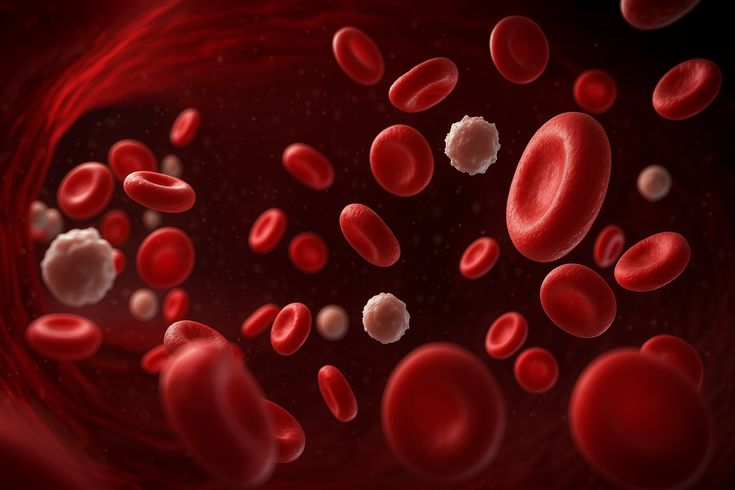
Haemoglobin is the protein inside your red blood cells that carries oxygen. Red cell size, listed on a blood count as MCV, shows how large those cells are.
Why it matters
Where ferritin tells you what is held in reserve, haemoglobin tells you what your blood can carry right now. When it falls, less oxygen reaches your muscles and your brain, and tiredness is usually the first thing people notice.
Red cell size then points towards the likely reason. Cells smaller than usual most often indicate iron is the limiting factor, though inherited conditions affecting haemoglobin can produce the same picture. Cells larger than usual suggest a shortfall in vitamin B12 or folate.
💡 Did you know? A single red blood cell carries around 270 million haemoglobin molecules, and each one can hold four oxygen molecules at a time. Your body replaces roughly 2 million red blood cells every second to keep that supply running.
Worth checking if you notice
Key takeaway
A full blood count is quick and inexpensive, and it does two things at once. It shows whether your oxygen-carrying capacity has dropped, and red cell size points to where to look next.
High-sensitivity C-reactive protein, or hs-CRP, measures low levels of inflammation in the body.
Why it matters
Your liver produces C-reactive protein in response to inflammation. A standard CRP test is used to detect the larger increases that come with infection or injury. hs-CRP measures much lower levels, which may reflect ongoing low-grade inflammation.
Inflammation running in the background appears to be part of the biological picture behind persistent tiredness. Among 4,847 people in the Whitehall II study who reported no fatigue at the start, those with higher CRP were more likely to develop it over the following three years.¹
That study followed people over time rather than testing a treatment, so it shows a consistent association rather than proof that inflammation is the direct cause.
Worth checking if you notice
Key takeaway
hs-CRP can show whether inflammation may be contributing to low energy. It cannot identify the source, which is what the rest of your results help narrow down.
Vitamin D is measured as 25-hydroxyvitamin D in the blood. Although it is called a vitamin, it behaves more like a hormone and influences muscle function, immunity and bone health.
Why it matters
Low vitamin D can be associated with fatigue, muscle weakness, aching bones and lower mood. Levels fall during the darker months, when less sunlight reaches the skin and your body produces less of it.
The connection with energy is clearest when levels are genuinely low. In a placebo-controlled trial of 120 adults with fatigue and vitamin D deficiency, correcting the deficiency produced a greater improvement in fatigue than placebo.² Testing is what tells you whether that applies to you.
💡 Did you know? Above roughly 50 degrees north, which covers the UK, the Netherlands and most of Germany, winter sunlight is too weak for your skin to make vitamin D. Time spent outdoors makes little difference during those months.
Worth checking if you notice
Key takeaway
Low vitamin D may contribute to fatigue when a true deficiency is present. Testing shows whether your level is genuinely low, and retesting shows whether it has moved.
Vitamin B12 supports red blood cell production and helps maintain the protective covering around your nerves.
Why it matters
When B12 levels fall, your body may struggle to produce healthy red blood cells, which affects oxygen delivery and can leave you feeling tired or weak.
B12 also affects your nervous system. Tingling, numbness, problems with balance, changes in memory or difficulty concentrating can appear before there is any obvious change in your blood count.
Absorption matters as much as intake. B12 comes almost entirely from animal foods, and getting it across your gut wall depends on stomach acid and a specific carrier protein. Some medications, including metformin and long-term acid-reducing treatments, can reduce absorption over time.
Worth checking if you notice
Key takeaway
Low B12 can affect energy and nerve function at the same time. A borderline result may need a follow-up test that shows whether your cells are actually short of it, since the number alone does not always answer that.
HbA1c reflects your average blood glucose over the past few months. Fasting glucose is a single snapshot, and fasting insulin shows how much work your body is doing to hold glucose where it should be.
Why it matters
Your cells run on glucose, and steadiness matters as much as the level. Sharp rises followed by sharp falls produce the familiar dip an hour or two after eating.
Insulin is what keeps that supply level. When it has to run high to do the job, glucose can stay within range for years while the effort behind it climbs. Measuring insulin alongside glucose shows that effort, which a glucose result on its own does not reveal.
💡 Did you know? HbA1c works because glucose attaches to the haemoglobin inside your red blood cells and stays there. Those cells live around four months, so the measurement carries a record of your average glucose across that whole period.
Worth checking if you notice
Key takeaway
Glucose can look normal while insulin works hard behind it. Measuring both shows the result and the effort, and these are among the most responsive biomarkers to changes in food and training.
Cortisol is the hormone that sets your daily energy rhythm. Measured in the morning, it shows whether that rhythm is starting the way it should.
Why it matters
Cortisol should peak shortly after you wake and decline across the day. That curve is what gets you going in the morning and lets you wind down at night.
When the pattern flattens, mornings take longer to get going however long you slept, and evenings can bring an unwelcome second wind. The shape carries more information than any single figure, and the time your sample was taken changes the result considerably.
Worth checking if you notice
Key takeaway
A morning cortisol result depends heavily on when the sample was taken. It shows whether your rhythm is starting correctly, and a profile across the day shows the full shape.
Folate, also called vitamin B9, is measured in your blood and reflects how much is available for producing new cells.
Why it matters
Folate works alongside vitamin B12 to build red blood cells. A shortfall produces the same enlarged cells and the same drop in oxygen-carrying capacity.
Diet is rarely the whole reason on its own. Absorption problems and periods of higher demand account for a large share of low results, which is why a low folate level usually points towards something else worth investigating.
Worth checking if you notice
Key takeaway
Folate and B12 produce a similar picture on a blood count, which is why they are measured together. Checking both shows which one is actually short.
Get the full picture behind your energy.
TSH is the signal your pituitary gland sends to your thyroid. Free T4 is the hormone your thyroid produces in response, and the amount available for your body to use.
Why it matters
Thyroid hormone sets the pace at which your body uses energy. When output falls, things slow down across the board, including your heart rate, your digestion, your body temperature and how quickly you recover from effort.
TSH usually moves first. As output starts to slip, your pituitary raises the signal to compensate, so TSH can climb while T4 still sits inside the normal range. Reading them together shows the demand and the supply at the same time.
💡 Did you know? Your thyroid mainly produces T4, which is relatively inactive. Most of it converts to the more active form, T3, in your liver, kidneys and other tissues rather than in the thyroid itself.
Worth checking if you notice
Key takeaway
TSH and free T4 tell you different things, so they are read as a pair. A raised TSH alongside a normal T4 suggests your thyroid is working harder to keep up.

Testosterone is reported as a total figure. SHBG, or sex hormone binding globulin, is the protein that binds it and determines how much is available for your body to use.
Why it matters
Testosterone supports muscle maintenance, mood, motivation and libido. Everyone produces it, at much higher concentrations in men, and at lower but still meaningful concentrations in women from the ovaries and adrenal glands.
Most of what circulates is bound to SHBG and unavailable to your tissues, so a total result can look adequate while the usable amount is low. SHBG also shifts with age, thyroid function and certain medications, which changes what the same total figure means.
Low testosterone is one contributor among several. It is worth knowing about, and it is rarely the complete explanation for low energy on its own.
Worth checking if you notice
Key takeaway
Total testosterone means little without SHBG next to it. Measuring both shows how much is actually available for your body to use.
Axo Longevity tests all ten lab tests, alongside 100+ lab tests across 36+ areas of health.
Your results are reviewed together to show how factors such as iron status, blood sugar regulation, thyroid function, inflammation, hormones and nutrient levels may be affecting your energy.
You receive your results in one dashboard, with a personalised action plan and clear guidance on what to focus on next.
→ Explore the Axo Longevity Care membership.
1) Which single blood test is best for low energy?
There is no single test. A full blood count with ferritin is the most useful starting point, because low iron reserves are common and they affect energy before anaemia appears. The rest of the panel narrows the picture from there.
2) Can all my biomarkers be normal and I still feel tired?
Yes. Sleep quality, sleep apnoea, medication, mood and training load all affect energy without moving a blood biomarker. Knowing what is not behind it is still useful information.
3) How often should I retest?
Iron and vitamin D respond within roughly eight to twelve weeks of a change. HbA1c reflects the past few months. Testing sooner than that measures short-term variation rather than progress.
This article is for information and does not replace individual medical advice. Reference ranges vary between laboratories and assays. Discuss your own results with a qualified clinician before changing medication or supplementation.