
Why does a breakfast that looks healthy sometimes leave you starving and foggy an hour later?
Most of the time, it is not about willpower. It is about what is on the plate, and sometimes, the order you eat it in. A breakfast built mostly on toast, granola, juice, or something sweet can send your blood sugar up quickly, then leave you with the kind of mid-morning crash you feel before lunch has even crossed your mind.
This breakfast works differently.
You get soft eggs with golden, just-set yolks, greens cooked down with garlic and lemon, and a cool, tangy layer of whipped feta yoghurt underneath. It feels like a proper savoury breakfast, not the kind of “healthy” meal you have to talk yourself into.
Underneath the flavour, there is a simple structure that makes sense for blood sugar: protein, fat, and fibre first, with any fast carbs kept small and eaten last. That combination slows digestion and helps soften the rise in glucose after you eat.
So if your energy tends to crash mid-morning, if your glucose runs higher than you would like, or if you are trying to eat in a way that supports metabolic health and healthy ageing, this is an easy place to start.
This breakfast will not fix insulin resistance on its own, and it will not replace testing or proper medical advice if your blood sugar markers are out of range.
What it can do is give your body a steadier start, in a meal you will actually want again tomorrow.
For the whipped feta yoghurt
For the greens
For the eggs
To serve
1. Whip the feta yoghurt first
Blend the Greek yoghurt, feta, olive oil, lemon, and a little black pepper until smooth and creamy. Spread it across the base of two plates and set it aside.

2. Cook the greens
Warm the olive oil in a pan over medium heat, add the garlic, and cook for about 30 seconds until fragrant but not browned. Add the spinach or chard with a pinch of salt and stir for 1 to 2 minutes until just wilted. Finish with a squeeze of lemon, then lift the greens onto the whipped feta.

3. Cook the eggs
In the same pan, add a little oil or butter and fry or softly scramble the eggs so the yolks stay just set. Season with salt and pepper.

4. Plate
Lay the eggs over the greens and feta, scatter over chilli flakes, and finish with a drizzle of olive oil. If you are having bread, keep it on the side and eat it last, after the eggs and greens, not before.
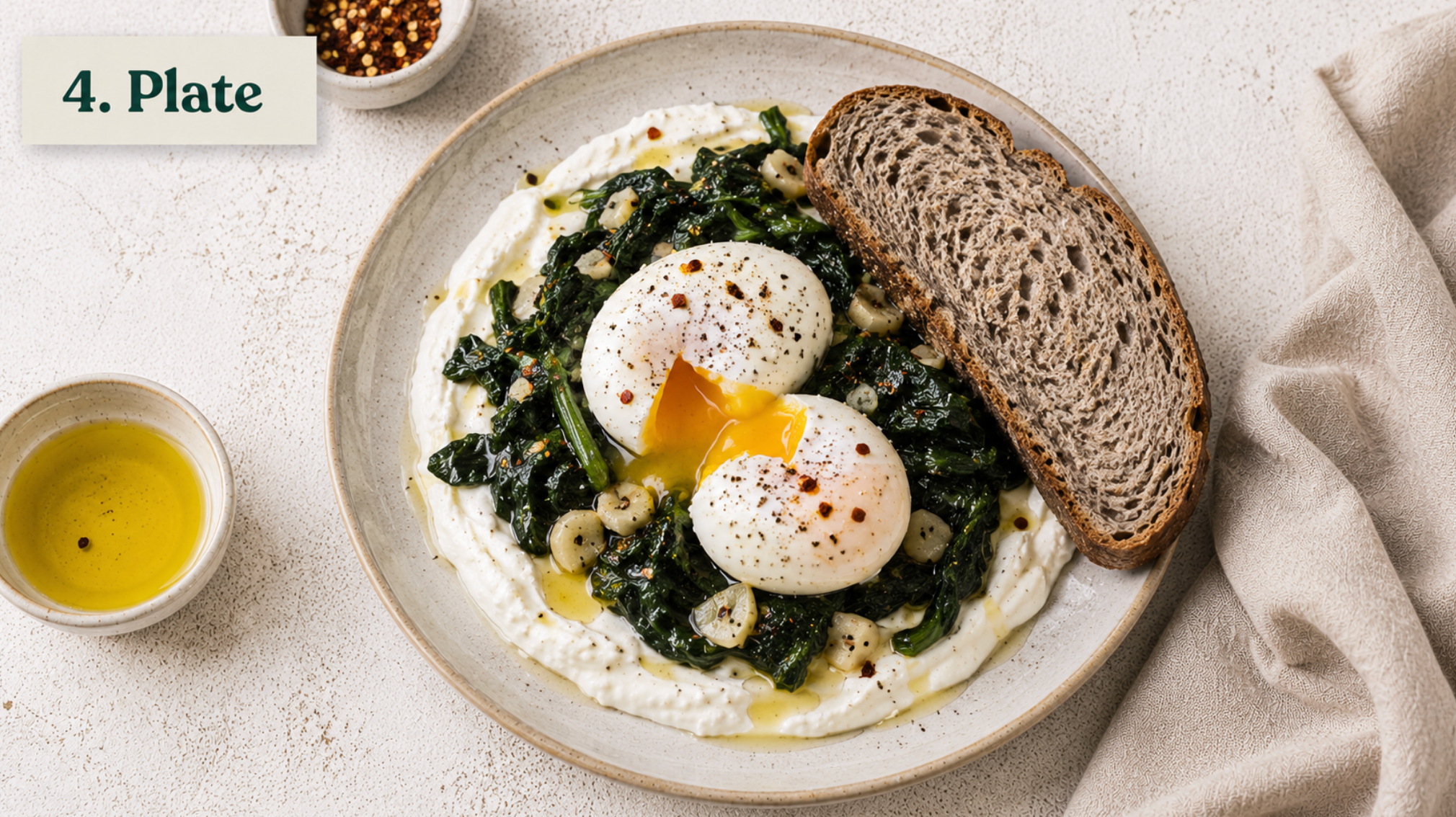
This breakfast is good for blood sugar because it front-loads protein, fat, and fibre and keeps fast carbs small and last. Research on meal order has found that eating vegetables and protein before carbohydrates lowers the glucose and insulin rise after a meal, an effect seen in people with type 2 diabetes and also in people with normal blood sugar, which makes it a sensible way to build any breakfast.
Axo measures fasting glucose, HbA1c (your average blood sugar over roughly three months), and insulin in one panel, giving you a clearer picture of how steady your blood sugar really is rather than guessing from how you feel.
Get a clearer picture of your health
1) Does the order you eat food in really affect blood sugar?
Yes, the order you eat food in can affect your blood sugar. Eating vegetables and protein before carbohydrates has been shown to lower the rise in glucose and insulin after a meal, because protein, fat, and fibre slow digestion and soften how quickly sugar enters your blood.
2) What is a blood sugar spike?
A blood sugar spike is a sharp rise in glucose after eating, usually from fast-digesting carbohydrates like white bread, sugary drinks, or juice. Frequent large spikes are linked to low energy, hunger soon after eating, and, over time, higher metabolic risk.
3) Is this breakfast suitable if I do not have diabetes?
Yes, this breakfast suits anyone, not only people with diabetes. Steadier blood sugar supports stable energy, fewer cravings, and long-term metabolic health, which matters for healthy ageing even if your glucose is currently in a normal range.
4) Can breakfast choices improve metabolic health over time?
Breakfast choices can support metabolic health over time when they are higher in protein, fat, and fibre and lower in fast carbohydrates. One meal will not change your biomarkers, but a steadier daily pattern can help support healthy blood sugar, energy, and weight.