






























Let's talk about the sun for a second. Or rather, the lack of it.
Somewhere around October, most of us across Europe start leaving for work in the dark and coming home in the dark. And even on a bright, crisp winter afternoon, the sun sits so low in the sky that your skin barely makes any vitamin D at all. The further north you live, the longer that stretch lasts.
That shows up in the numbers. A study of more than 55,000 people across Europe found that around 1 in 6 had properly low vitamin D between October and March, roughly double the summer figure.
So for the next few months, what you eat matters a lot more than usual. Which brings us to dinner.
This roast salmon is one of those meals that feels a little bit fancy but is secretly very easy. The salmon goes in the oven and looks after itself. Meanwhile, you fry mushrooms until they are golden and smell amazing with garlic and thyme, then throw in some greens with a squeeze of lemon. That's it.
You are eating two of the very few foods that actually contain vitamin D: oily fish and mushrooms that have been exposed to UV light (more on those in a minute, they are a fun little trick of nature). Plus olive oil, which helps your body absorb it.
Will one plate fix low vitamin D? No, and we will never pretend it can. But it is a delicious way to give your levels a helping hand while the days are short.
Quick one: what is vitamin D, 25-hydroxy?
It is the form of vitamin D your blood carries around, and it is what a vitamin D lab test actually measures. Think of it as your body's vitamin D savings account, built up from sunlight and everything you eat over the past few weeks.
What do you need?
For the salmon
- 2 salmon fillets, skin on, about 130g each (rainbow trout works brilliantly too)
- 1 tbsp extra virgin olive oil
- Zest of 1 lemon
- Sea salt and black pepper
For the garlicky mushrooms
- 250g mushrooms labelled "high in vitamin D" or "UV treated", thickly sliced
- 2 tbsp extra virgin olive oil
- 2 garlic cloves, sliced
- A few sprigs of fresh thyme, or 1 tsp dried
- Sea salt and black pepper
For the greens
- 1 tbsp extra virgin olive oil
- 150g cavolo nero, kale or chard, stalks pulled off and leaves torn
- A squeeze of lemon
To serve
- A handful of fresh parsley, chopped
- Lemon wedges
- A good drizzle of extra virgin olive oil
- A spoon of Greek yoghurt, if you like
Let's cook
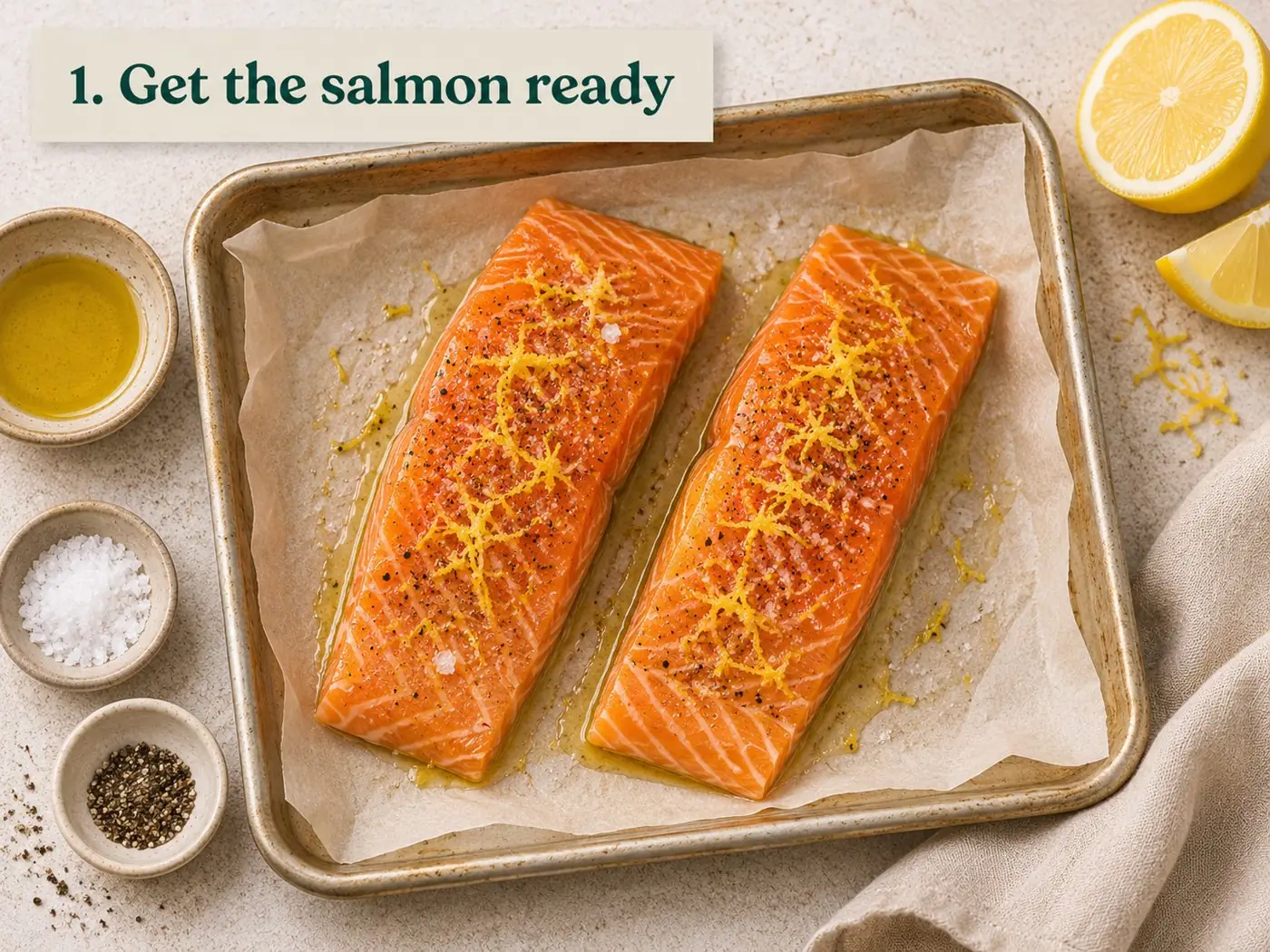
1. Get the salmon ready: Turn the oven on to 200°C (180°C fan). Pat the salmon dry with kitchen paper, because dry skin is crispy skin. Rub it with olive oil and lemon zest, season it well and lay it skin side down on a lined tray.
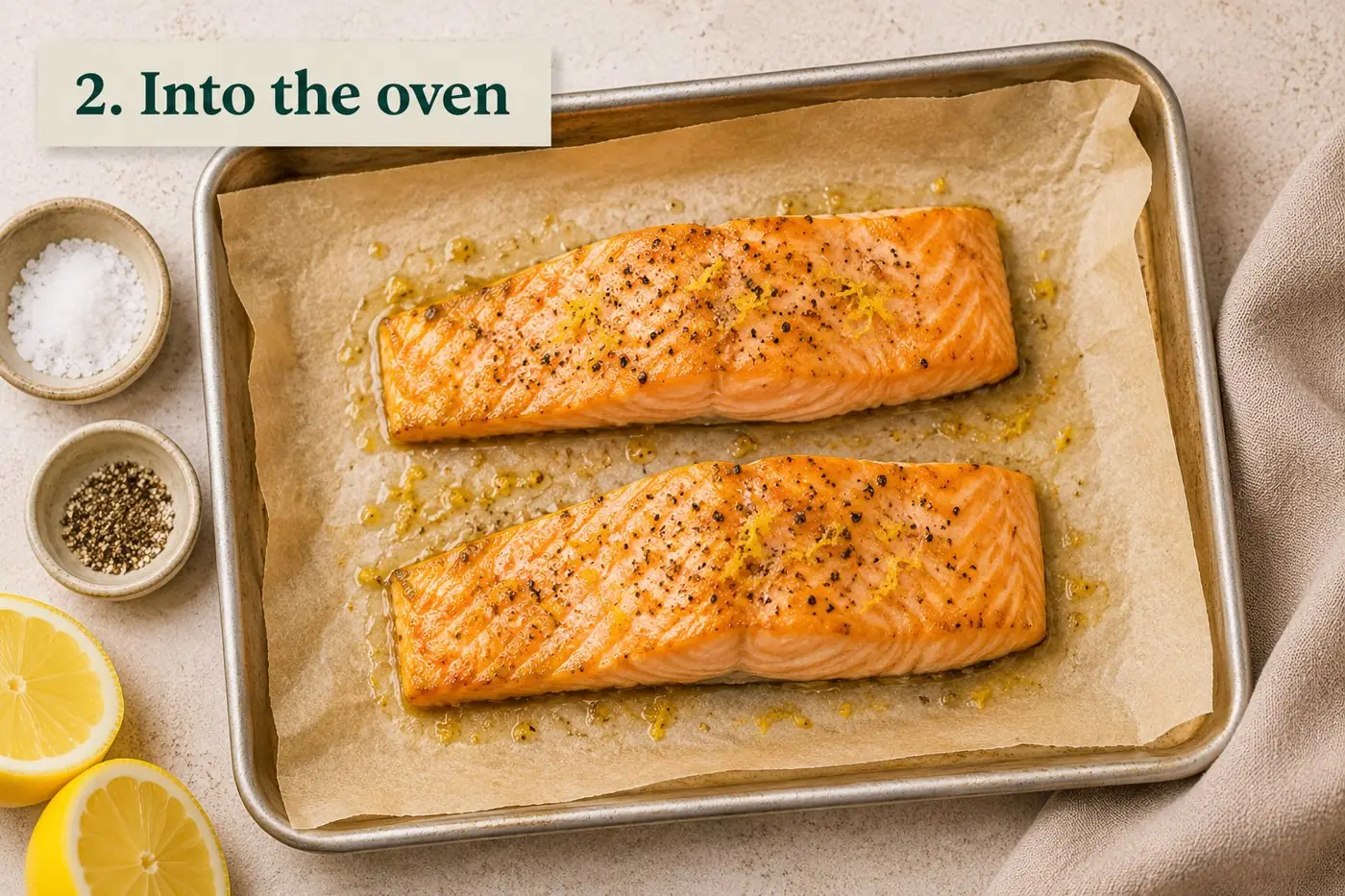
2. Into the oven: Roast for 12 to 14 minutes. You want it to flake easily but still look a little glossy in the middle.
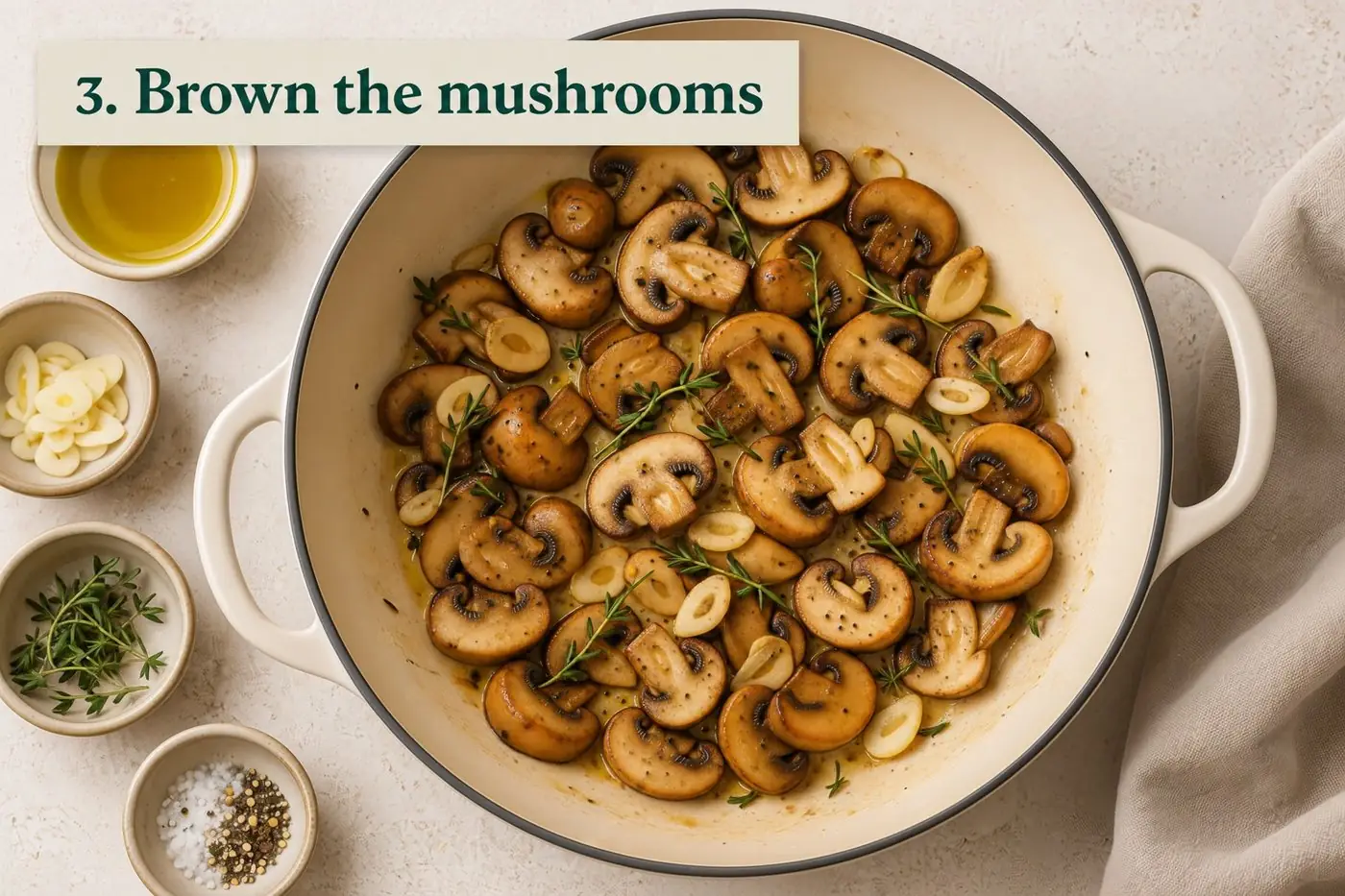
3. Brown the mushrooms: While the salmon does its thing, heat the olive oil in a wide pan until it is properly hot. Add the mushrooms in a single layer and now the hard part: don't touch them. Give them 3 to 4 minutes so they go golden instead of soggy. Then stir in the garlic and thyme, season and cook for another couple of minutes until your kitchen smells wonderful.
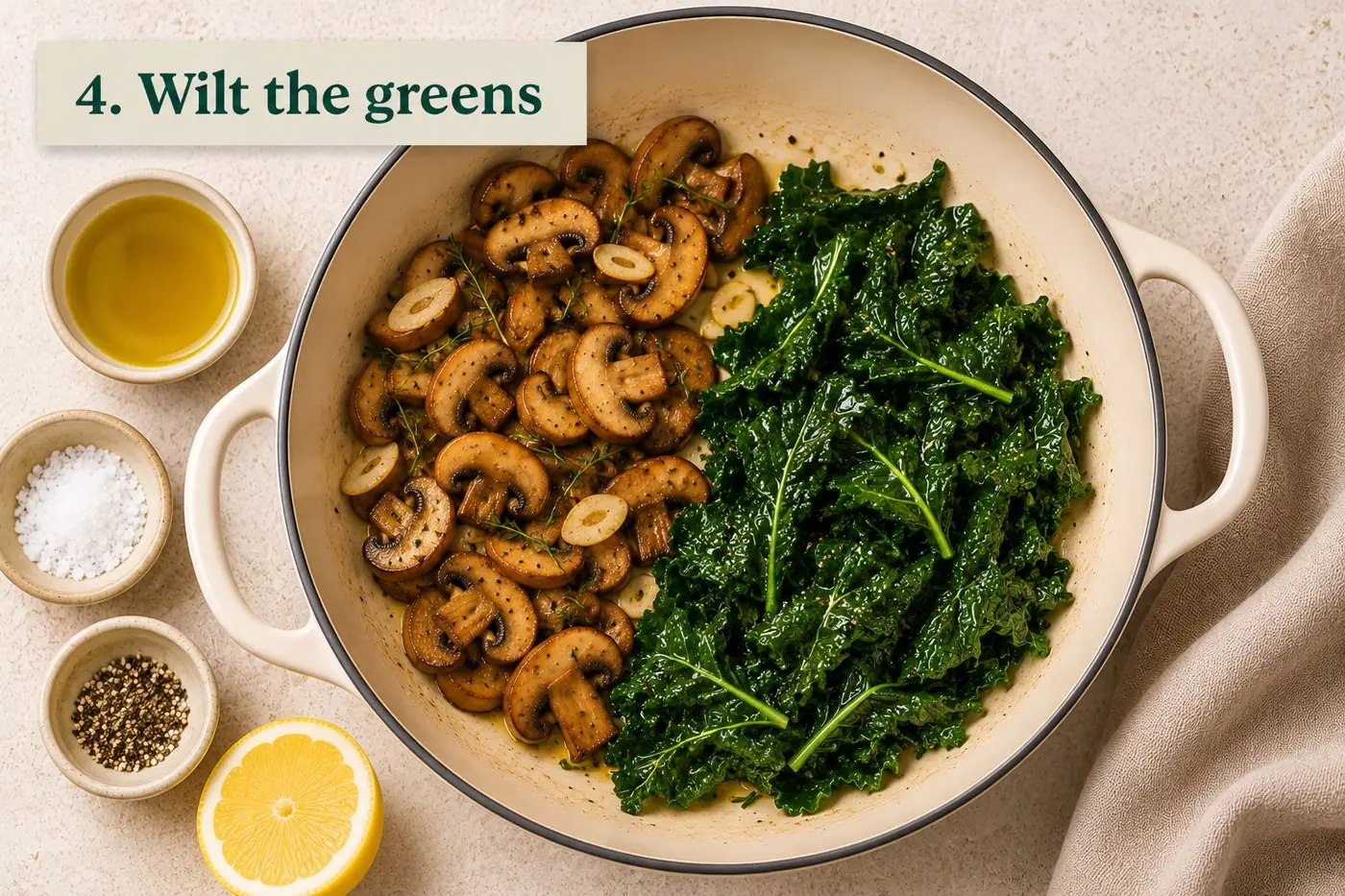
4. Wilt the greens: Push the mushrooms to one side, add a little more oil and the greens with a pinch of salt. Stir for 2 to 3 minutes until they soften and turn glossy. A squeeze of lemon and you're done.
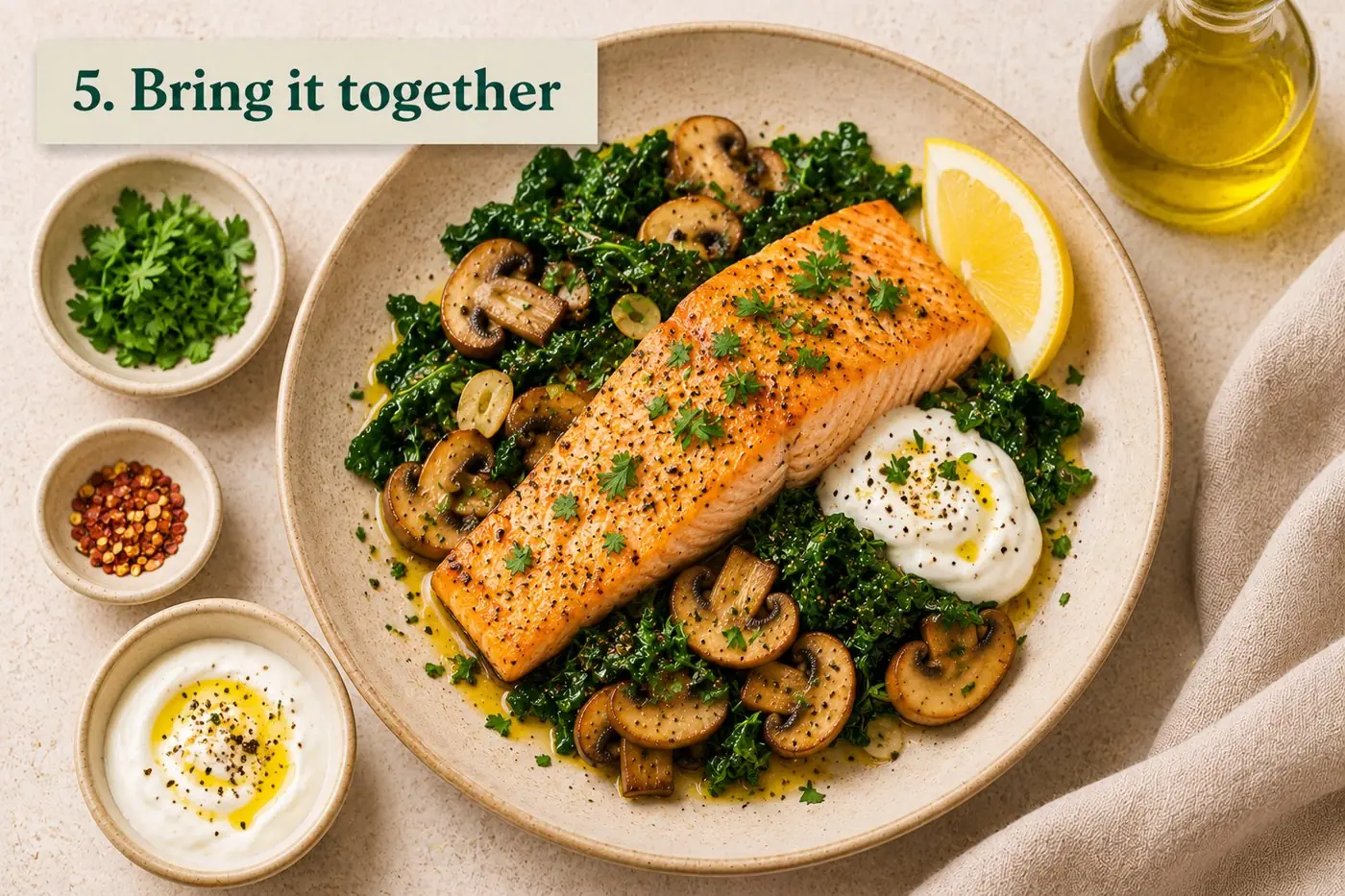
5. Bring it together: Pile the greens and mushrooms onto plates, sit the salmon on top and finish with parsley, olive oil, a lemon wedge and a spoon of yoghurt if you're using it.
So why is this so good for vitamin D?
Here's a slightly surprising fact: very few foods contain much vitamin D at all. Oily fish is the star. In US food data, an 85g portion of cooked sockeye salmon gives you about 14 micrograms, and farmed rainbow trout about 16.
For context, the European Food Safety Authority puts an adequate intake for adults at 15 micrograms a day, assuming you are getting very little sun. Amounts do vary between fish and how they were raised, so think of these as a rough guide rather than a promise.
Now, the mushrooms. This is the fun bit. Mushrooms work a bit like your skin: put them under UV light and they make their own vitamin D. Growers now do this on purpose, and half a cup of UV exposed mushrooms can carry around 9 micrograms. Ordinary mushrooms grown in the dark have almost none, so it is worth checking the label. Research on mushrooms found the vitamin D from them raised blood levels about as well as a supplement did.
And the olive oil isn't just there for flavour. Vitamin D dissolves in fat, and in one trial of 50 older adults, taking vitamin D with a meal containing fat led to a 32% higher peak in blood levels than taking it with a fat free meal. So if you take a supplement, here's a free tip: have it with dinner, not with your morning black coffee.
Before you test: Vitamin D swings with the seasons, so make a note of the month you test and whether you've had a sunny holiday or started a supplement in the last few weeks. A late winter result usually shows you your lowest point of the year, which is exactly what makes it useful.
Axo Longevity measures vitamin D (25-hydroxy) as part of your wider panel and compares it to optimal ranges as well as standard ones. So instead of guessing whether your winter habits are working, you can see it in your results when you retest.
→ Get a clearer picture of your health
A few questions people always ask
Can I get enough vitamin D from food alone in winter?
It's tricky. Even a diet with plenty of oily fish and eggs often falls short when the sun is low, which is why many European health services suggest a daily supplement through the darker months. Food like this still counts and adds up over the week.
Which foods have the most vitamin D?
Oily fish leads the way: salmon, trout, herring, sardines and mackerel. Egg yolks, red meat and liver add smaller amounts, and some cereals, spreads and plant milks are fortified. UV treated mushrooms are the best option if you don't eat fish.
Are UV mushrooms a gimmick?
Not at all. Mushrooms naturally make vitamin D when they are exposed to UV light, just like your skin does in the sun. Growers just give them a quick blast of UV light before they reach the shop. Look for "high in vitamin D" or "UV treated" on the pack.
Can you have too much vitamin D?
Yes, but it almost always comes from supplements, not food or sunshine. The European Food Safety Authority sets the safe upper limit for adults at 100 micrograms (4,000 IU) a day, because very high intakes can push calcium in the blood too high. If a test shows you are low, talk to a doctor about the right dose for you.
More from the Longevity Kitchen
- Grilled mackerel with spinach and pumpkin seed pesto
- High-fibre barley and white bean bowl to help lower cholesterol
- Spiced red lentil bowl with greens, lemon and olive oil
Axo Longevity provides health information, not medical advice. Speak to a healthcare professional about your results.
References
- Cashman KD, Dowling KG, Škrabáková Z, et al. Vitamin D deficiency in Europe: pandemic? American Journal of Clinical Nutrition, 2016;103(4):1033-1044. doi:10.3945/ajcn.115.120873
- EFSA Panel on Dietetic Products, Nutrition and Allergies. Dietary reference values for vitamin D. EFSA Journal, 2016;14(10):4547. doi:10.2903/j.efsa.2016.4547
- EFSA Panel on Nutrition, Novel Foods and Food Allergens. Scientific opinion on the tolerable upper intake level for vitamin D. EFSA Journal, 2023;21(8):8145. doi:10.2903/j.efsa.2023.8145
- National Institutes of Health, Office of Dietary Supplements. Vitamin D: fact sheet for health professionals. https://ods.od.nih.gov/factsheets/VitaminD-HealthProfessional/
- Keegan RJ, Lu Z, Bogusz JM, Williams JE, Holick MF. Photobiology of vitamin D in mushrooms and its bioavailability in humans. Dermato-Endocrinology, 2013;5(1):165-176. doi:10.4161/derm.23321
- Dawson-Hughes B, Harris SS, Lichtenstein AH, et al. Dietary fat increases vitamin D-3 absorption. Journal of the Academy of Nutrition and Dietetics, 2015;115(2):225-230. doi:10.1016/j.jand.2014.09.014