In Part 1, we looked at how desire works. Your brain, nervous system, circulation, hormones and metabolism all play a part, and they work as a team.
So what happens when something in that team stops pulling its weight?
That's what this part is about. We'll go through the most common reasons libido drops in women and men, the lab tests that can help you work out what's going on, and the changes that help rebuild things from the ground up.
If your desire has dropped and it's stayed that way, there's usually a reason. And it's rarely "just you".
It's worth listening to.
There usually isn’t one single cause.
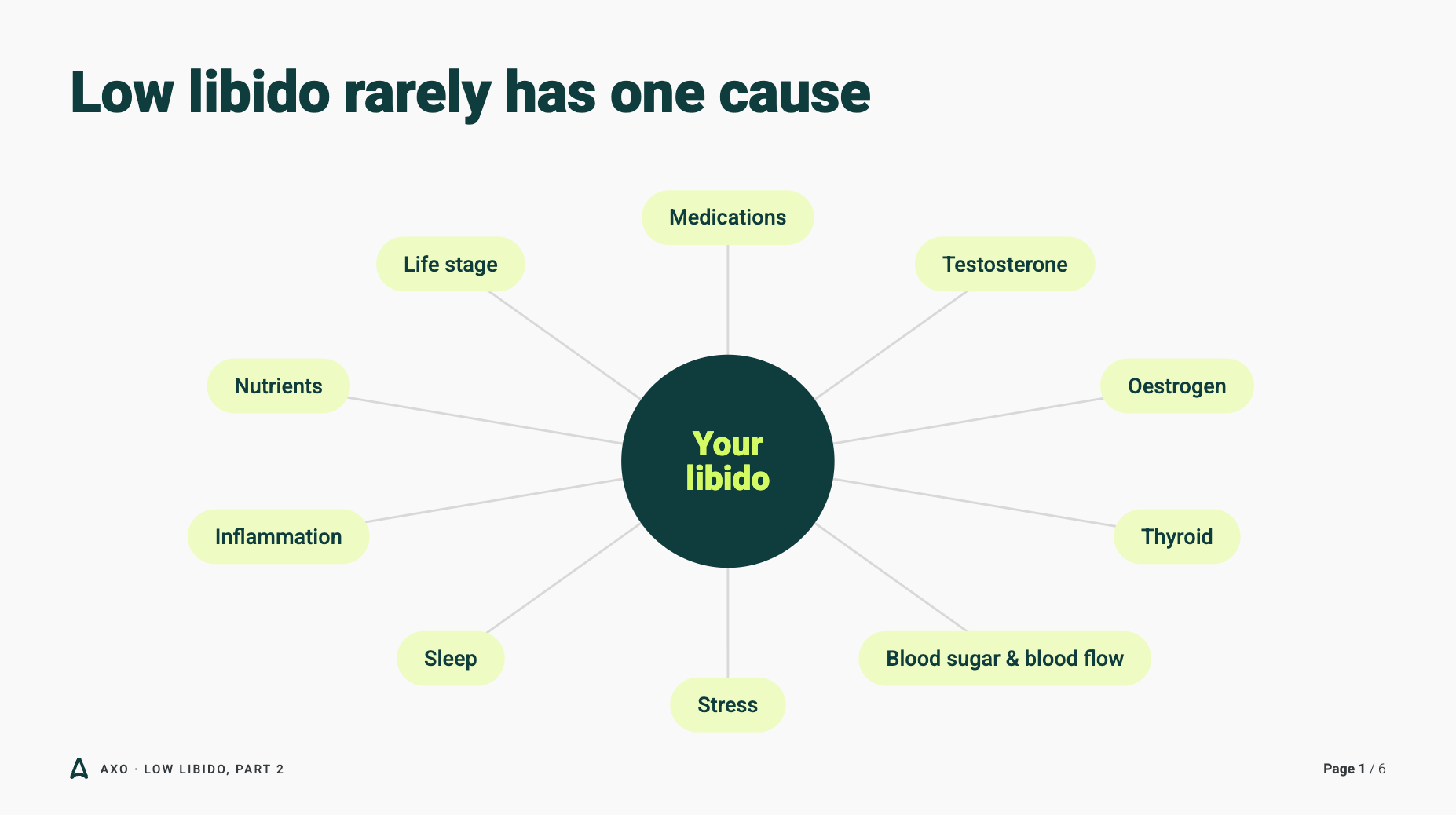
A medication might be part of it. Your testosterone, oestrogen or thyroid might have shifted. Your blood sugar or blood vessels might not be working as well as they used to. Stress, bad sleep, inflammation or a missing nutrient could be chipping away in the background.
And sometimes it's simply a stage of life where your hormones are meant to change.
One thing to be clear on: no blood test can diagnose low desire. What tests can do is show you which of these systems has moved, so you're not guessing.
It's often the easiest cause to spot, because the timing tends to give it away.
Ask yourself: did things change after you started a new medication, changed your dose or switched to something else?
If the answer is yes, that's worth paying attention to.
SSRIs and other antidepressants
SSRIs (selective serotonin reuptake inhibitors) work by leaving more serotonin available in the brain.
The catch is that serotonin can turn down dopamine signalling. Dopamine is a big part of motivation, initiative and wanting sex in the first place.
So you might notice:
You're far from alone if this sounds familiar. Sexual side effects are one of the main reasons people stop taking these medications.
If you're going to raise it with your doctor, try to be specific. Is it the wanting, the arousal or the orgasm that's changed? They aren't the same thing, and they don't all run on the same systems. Please don't stop or change a medication on your own. There are often alternatives worth discussing.
Have you ever noticed your libido felt a bit flatter on the pill? With the combined pill (oestrogen plus progestogen), there are two main reasons that can happen.
Ovulation is switched off. (Some progestogen-only methods don't always stop ovulation, so this part applies mainly to the combined pill.) That also switches off the mid-cycle rise in oestradiol. If you used to feel more interested around ovulation, that lift can quietly disappear.
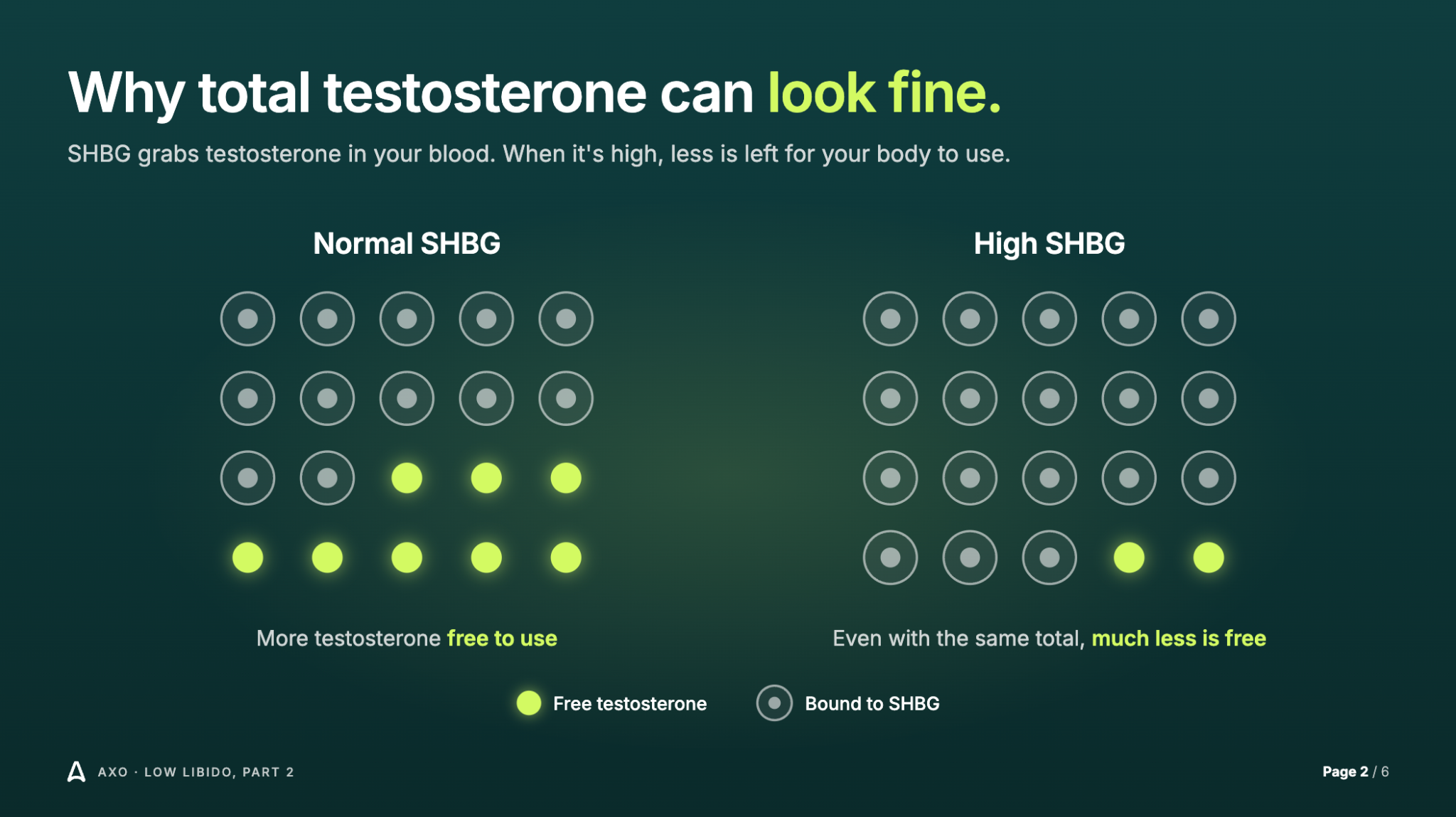
SHBG goes up. Sex hormone-binding globulin (SHBG) is a protein that grabs hold of testosterone in your blood. The more SHBG you have, the less testosterone is free for your body to use. Combined oral contraceptives can push SHBG up several times over. At the same time, your ovaries make less testosterone, so there's less to start with too. SHBG doesn't always drop back to normal straight away when you stop.
For some women, that shows up as less spontaneous desire and needing more stimulation before anything starts to build.
2. Hormonal changes
Testosterone
Think of testosterone as the hormone behind initiative. It's linked to spontaneous desire and that pull towards sex, more than the physical side of it.
In men, testosterone follows a daily rhythm and is usually highest in the morning. It rises overnight while you sleep, which is why short or broken sleep hits it so hard. In one study, a single week of five-hour nights lowered young men's daytime testosterone by around 10 to 15%.
Levels drift down slowly from around 30, often quoted at about 1% a year. But age is only part of the story. Sleep, body fat and general health explain a lot of the drop. Men who stay lean and sleep well tend to see a much gentler decline than the averages suggest.
In women, testosterone levels are far lower than in men, but they still play a part in desire, arousal and satisfaction. The link isn't as neat as it is in men, though. A single blood level doesn't map closely onto how much desire a woman feels, and the strongest evidence for testosterone treatment is in postmenopausal women with distressing low desire.
Hormonal contraception can reduce how much testosterone is available by raising SHBG. Chronic stress and poor sleep can also lower how much your body makes in the first place.
When testosterone drops, you might notice you think about sex less and need more stimulation before desire shows up.
Total testosterone measures all the testosterone in your blood, bound and unbound. It's a good starting point, but it can look perfectly normal even when the amount your body can actually use is low.
Free testosterone is the part that isn't tightly bound to proteins, so it's available for your tissues to use. It can line up more closely with how you actually feel.
SHBG is the protein that binds testosterone. When it's high, more testosterone gets locked away. That's why total and free testosterone can tell two very different stories.
→ Testosterone, free testosterone and SHBG are all part of the Axo Longevity care membership
In women, oestradiol helps support genital blood flow, lubrication, sensitivity and tissue comfort.
It usually peaks before ovulation, which is one reason some women notice their interest in sex rise around that point in their cycle.
During menopause, oestradiol falls. That can lead to dryness, thinner tissue and discomfort during sex.
And once sex starts to hurt, your body can begin to expect that discomfort. Desire can fall with it.
In men, oestrogen is still needed. The issue is having too much.
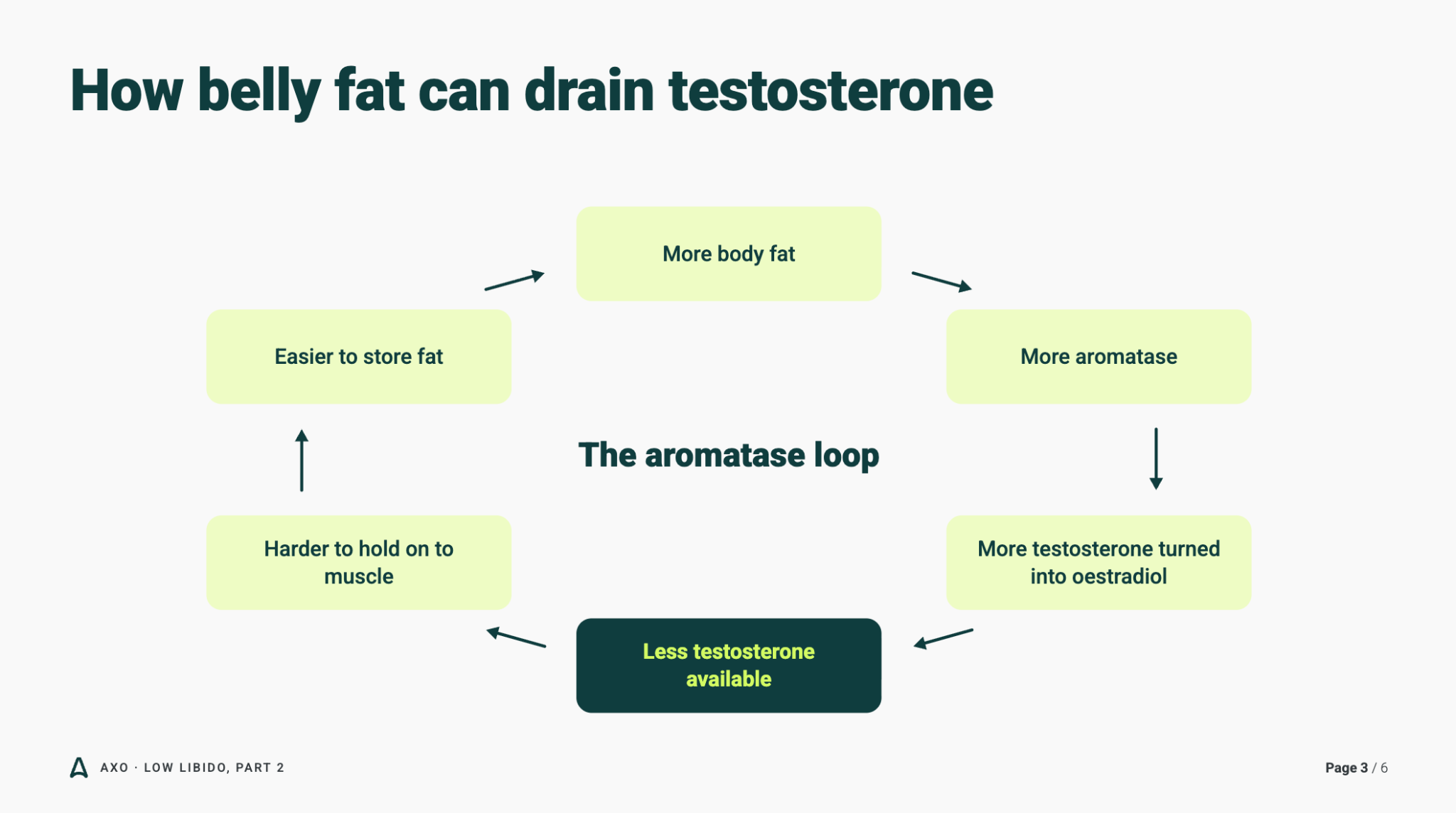
Aromatase is the enzyme that converts testosterone into oestradiol, and it’s concentrated in abdominal fat.
The cycle can look like this:
More abdominal fat → more aromatase → more testosterone converted to oestradiol → less available testosterone → harder to hold muscle → easier to store fat → less testosterone again
Lab test to look at
Oestradiol measures the main circulating form of oestrogen.
For women, that number needs context. Cycle timing, age, contraception and life stage all change what the result means.
For men, it can help show whether more testosterone is being converted into oestradiol rather than staying available for use.
Your thyroid helps set the pace for a huge number of processes in the body, including energy, mood, circulation and menstrual cycles.
When thyroid function slows down, sexual interest can slow down with it.
Usually, libido isn’t the only thing that changes. You may notice a few things happening together:
If several of these start showing up at the same time, thyroid function is worth looking at.
Lab tests to look at
TSH stands for thyroid-stimulating hormone. It’s the signal your pituitary gland sends to your thyroid. If TSH is high, it can mean your body is having to push the thyroid harder to do its job. That’s why it’s usually the first thyroid test clinicians order.
Free T4 is the main hormone your thyroid produces, measured in the form that’s available for your body to use. Read alongside TSH, it helps show whether your thyroid is responding properly.
Free T3 is the more active thyroid hormone. Your body converts it from T4 in the tissues. It can add more context when symptoms are still there even though TSH looks normal.
→ Not sure whether your thyroid has been properly checked?
There’s a circulation side to libido that’s easy to overlook.
Arousal depends on blood flow.
Genital tissue needs to fill with blood. In men, that supports an erection. In women, it contributes to sensitivity and lubrication.
For that to happen properly, your blood vessels need to widen. Nitric oxide helps them do that, and it’s released by the endothelium, the thin layer of cells lining every blood vessel in your body.
This is where metabolic health starts to matter.
Unstable blood sugar, insulin resistance, chronic inflammation and excess abdominal fat can all damage that lining.
The chain looks like this:
Poorer metabolic health → endothelial damage → less nitric oxide → weaker vasodilation → less reliable blood flow
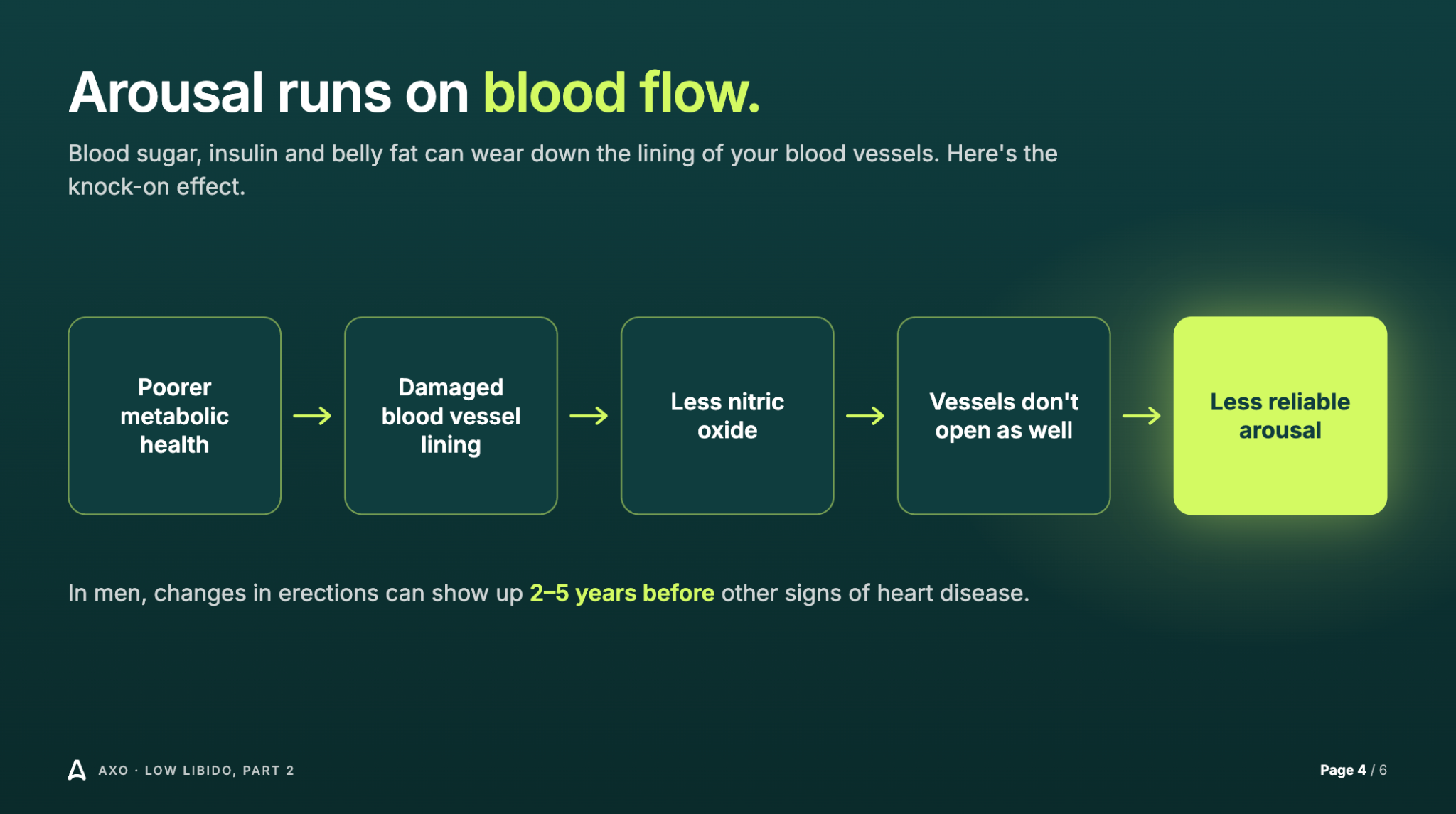
In men, this can sometimes show up early through changes in erections.
A new and persistent change in erections can be an early cardiovascular signal, so it’s worth taking seriously for reasons that go beyond sex.
Other signs that your metabolic health may have shifted include a growing waist circumference, feeling tired after meals and more frequent sugar cravings.
Lab tests to look at
Fasting glucose gives you a snapshot of your blood sugar at one point in time, usually after fasting overnight.
HbA1c gives you a broader picture by showing your average blood glucose over the previous two to three months. That means it can pick up patterns that one fasting result might miss.
Fasting insulin tells you how hard your body is working to keep your blood glucose stable. Insulin can rise before glucose does, which makes it useful as an earlier warning sign.
HOMA-IR uses fasting glucose and fasting insulin together to estimate insulin resistance.
→ Metabolic health is where most people find something they did not expect.
Arousal is much easier when your body feels safe.
Your nervous system needs to be able to shift into a parasympathetic state, because that’s when the blood flow changes involved in arousal can happen properly.
If you’ve been under sustained stress, your body can stay in a more alert state for longer than it should.
Sleep becomes lighter or more fragmented. Recovery slows down. You have less mental and physical capacity for sex because your body is busy dealing with whatever else it thinks needs your attention.
You might notice things like waking during the night, constant overthinking, irritability, feeling exhausted in the morning, recovering slowly after training, gaining weight around your abdomen or seeing changes in your cycle.
Lab test to look at
Cortisol is your main stress-response hormone.
Its level changes throughout the day. It normally rises after you wake up and falls towards the evening.
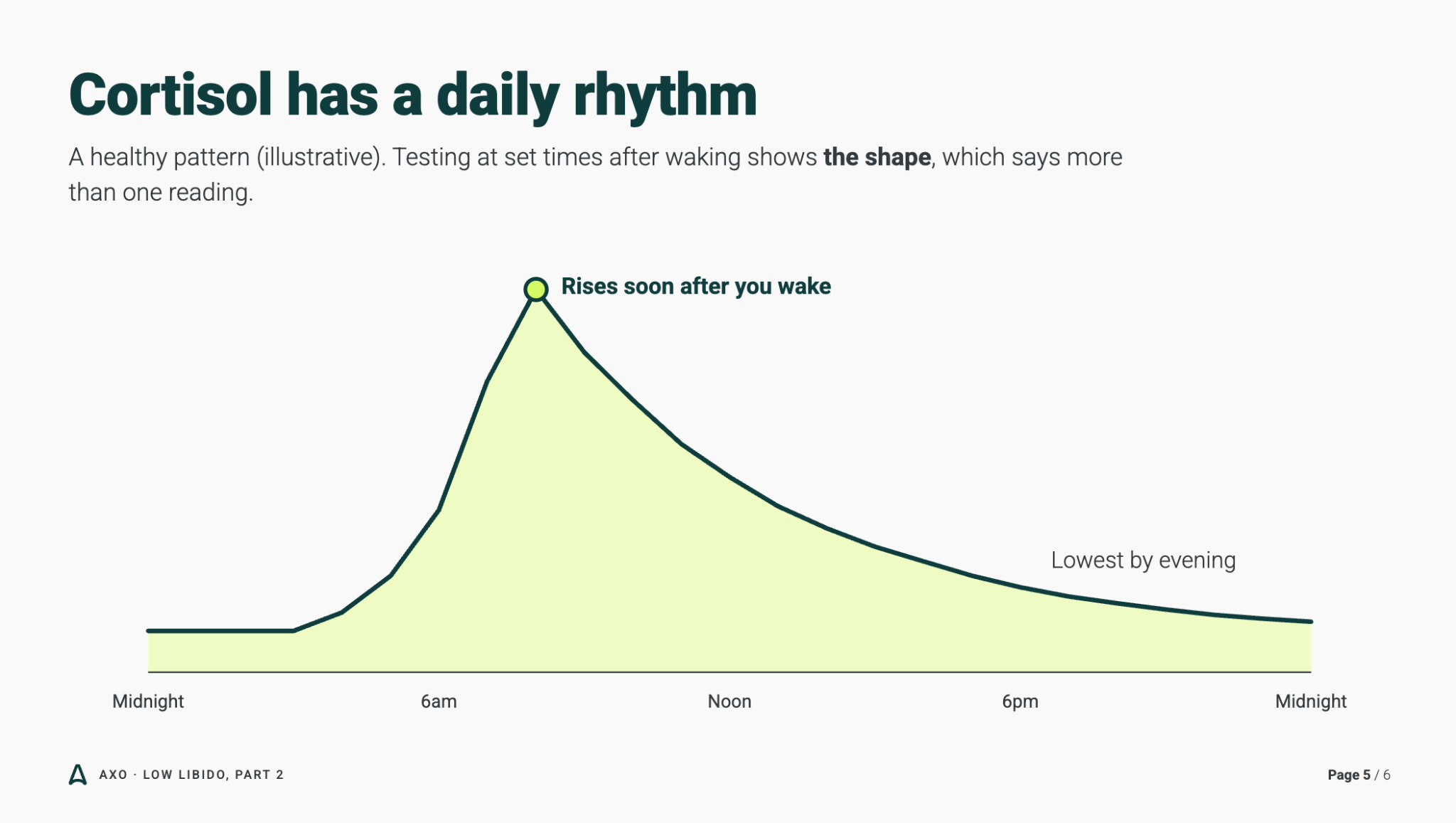
When cortisol is measured at specific times after waking, the rhythm can tell you more than a single reading. Results still need context, because sleep, illness, exercise, medication and the timing of the sample can all change them.
Sleep is when a lot of the systems we’ve just talked about get a chance to recover.
In men, most testosterone is produced during deep sleep.
Sleep also helps regulate your nervous system, emotional balance and the way your body handles glucose and insulin.
So when poor sleep carries on for weeks or months, it doesn’t just make you feel tired.
Your energy drops. Stress becomes harder to deal with. Motivation changes. Recovery suffers. And somewhere in the middle of all of that, sexual interest can disappear too.
That’s why some people notice their libido returning when their sleep improves, even when they haven’t done anything specifically to “fix” their libido.
It’s also why sleep is worth looking at before automatically assuming hormones are the problem.
Inflammation itself isn’t bad. A short inflammatory response is a normal part of how your body protects and repairs itself.
The issue is when low-grade inflammation sticks around.
That ongoing inflammatory state uses energy, gets in the way of recovery and can affect your hormonal balance and how energetic you feel.
If your body is constantly dealing with a low-level fire, it has fewer resources for things it considers non-essential.
Common contributors include ultra-processed food, alcohol, poor sleep, ongoing stress, persistent infection and training hard without enough recovery.
Lab test to look at
hs-CRP stands for high-sensitivity C-reactive protein.
It picks up low levels of a protein that rises when inflammation is present.
It can tell you that inflammation is there. It can’t tell you what is causing it. That’s why the result makes much more sense when you look at it alongside your symptoms and your other test results.
Sexual function needs energy at a cellular level. It also relies on neurotransmitters and your body’s ability to make and use hormones.
If you’re deficient in certain nutrients, all three can be affected.
Usually, though, libido won’t be the only symptom.
Lab tests to look at
Ferritin shows how much iron your body has stored.
Iron helps carry oxygen around your body, so when your stores are low, fatigue, breathlessness and struggling more during training can show up long before anything else.
Vitamin D (25-hydroxyvitamin D) is the standard way to measure vitamin D status.
Vitamin D behaves a lot like a hormone and has receptors throughout the body. Low levels are also commonly seen alongside fatigue and low mood.
Zinc is involved in reproductive hormone biology and your immune system. A blood result is most useful when you look at it alongside your diet and symptoms.
Magnesium is involved in hundreds of enzyme reactions, including nerve signalling and energy production.
Most of the magnesium in your body sits outside the bloodstream, so a standard blood test needs to be interpreted carefully.
Low libido on its own usually isn’t enough to make this a nutrient issue, plus ongoing tiredness or weakness is a different conversation.
Hormones fall sharply after birth. That can bring dryness and less sensitivity.
If you're breastfeeding, prolactin also stays high, and prolactin turns down your reproductive hormones.
Then add everything else: serious sleep loss, a huge mental load, and a body that's still healing from pregnancy and birth.
With all of that going on, a drop in desire makes complete biological sense. It doesn't mean something is wrong with you.
During perimenopause, cycles get less predictable and hormones can swing a lot before they settle lower.
As oestrogen falls, you might notice dryness, tissue changes and discomfort during sex.
Sleep often gets more broken at the same time, which piles on more tiredness.
And if sex becomes uncomfortable, it becomes less enjoyable.
If it's less enjoyable, of course you'll want it less.
Testosterone slowly declines after 30.
That can come with less spontaneous desire, more tiredness, losing muscle and gaining fat around the middle.
Sleep apnoea makes it worse, because constantly interrupted sleep cuts into the overnight testosterone rise.
If weight around the middle goes up too, the aromatase loop kicks in on top of that.
So if your libido has dropped, try not to write it off as "just getting older". Hormones, blood vessels, metabolism and stress often stack up together, and most of them can be worked on.
The goal isn't to force your libido back.
It's to get your body back to a place where desire has room to show up again.
Sleep
Stress
Keep your blood sugar steady
Are you eating enough?
Sometimes a disappearing libido is your body's way of saying it doesn't have enough fuel for everything you're asking of it.
When you're taking in too little energy for what you're burning, your body treats it as a threat. Reproduction slides down the priority list.
Signs you might be under-eating:
This is most common in athletes and in people who've been restricting food for a long time.
Fix deficiencies, don't guess
Supplement based on your results.
More isn't always better. Too much of one nutrient can throw another out of balance, because they all work together.
Test first, correct what's actually low, then retest after about three months.
Strength training, three times a week or more. Focus on big movements that work large muscle groups, like squats, deadlifts, presses and rows. It improves insulin sensitivity, body composition and circulation.
Move every day for 20 to 30 minutes. Walking, cycling and swimming all count. Regular movement keeps your blood vessels healthy, can lower inflammation and helps bring stress hormones back down.
Don't overdo it. Training hard without enough recovery can push things the wrong way.
Cortisol goes up. Testosterone can drop. Libido goes flat.
Watch for ongoing tiredness, irritability, poor sleep, workouts getting worse instead of better, and picking up colds more often.
If sex hurts, feels dry or is just uncomfortable, your body starts bracing for it before anything has even happened.
Desire pulls back to protect you.
That has nothing to do with willpower.
Book an appointment if you have:
A therapist or counsellor can also really help if there's ongoing anxiety or low mood, past trauma that affects how you feel about sex, real strain in your relationship, or shame around sex.
A drop in libido isn't all in your head.
It's a signal from your body, just like tiredness or a change in your cycle, and it deserves to be taken seriously.
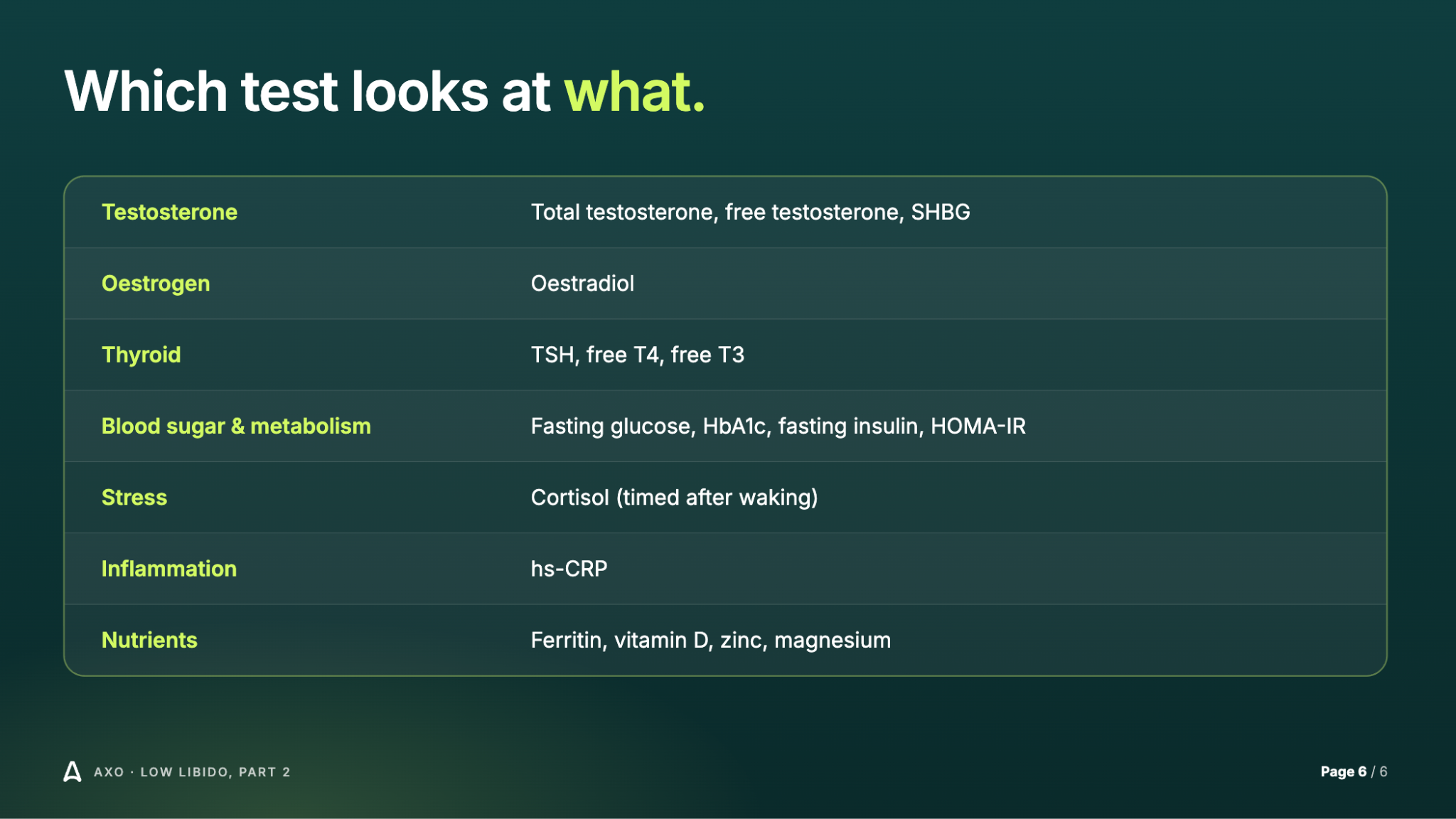
Axo Longevity tests the systems that shape desire: hormones, thyroid, metabolic health, inflammation and nutrients. It's one panel, read as a whole, so you can see what to work on first instead of trying everything at once.
At Axo Longevity we run 100+ lab tests across 36+ health areas, and read each result against that wider picture rather than as an isolated number.
You receive:
- Your Axo Longevity Health Score, showing how your key systems are performing together
- Results interpreted against optimal ranges, not only laboratory thresholds
- A personalised action plan shaped around your results, lifestyle and goals
- Repeat testing so you can see what is changing over time.
References